If you're ready to try your hand at cooking homemade Thai food, these recipes will get you started. Explore Thai soups, appetizers, main course dishes and a dessert. Whatever type of Thai you're in the mood for, you'll find it here at its tantalizing best!
If you've never had the real stuff, then you'll fall in love with this special Thai chicken satay recipe. Strips of chicken or beef are marinated in a special Thai paste, then skewered and grilled or broiled. It is then served with homemade peanut sauce for a memorable taste.
Each mini wrap provides a burst of Thai flavors that hit different parts of the palate all at once. It's based on the traditional Thai appetizer miang kum. It will be the hit of the party or you can make a platter to enjoy as a meal.
This delicious soup might even be good for what ails you. It's a version of Tom Yum Goong, which is basically Tom Yum soup but with a little coconut milk added for thickness and flavor.
Larb Gai is a classic, traditional Thai dish that is made with pork in Thailand, but this recipe uses chicken. Fresh mint is a key ingredient. Enjoy it hot over cold greens or on rice.
It's called waterfall beef because of the splashing sound of juices on the hot grill. The beef is sliced thinly and served with a mixture of salad greens and fresh papaya along with a special Thai dressing.
This is the most popular salad in Thailand, perhaps because it's low in calories but packed with flavor and crunch. Cooked shrimp, crab meat, or cashews can be added, or enjoy it with a bowl of sticky rice.
The tiger is crying either from the chilies or because a hunter killed his cow. For this dish, you'll marinate the beef and quickly broil it to medium-rare before slicing and serving it with a side sauce. Enjoy it with rice or in a salad.
Chunks of tender chicken are simmered in a homemade green curry sauce along with your choice of vegetables in this gourmet-style recipe. This dish is very aromatic and beautiful to serve to guests.
Panang curry features warm, rich flavors from Malaysia, Burma, and even India. It's a beautiful red curry usually made with chicken. While there are a lot of ingredients, you'll be processing them together and they will give it the complex flavor.
This classic yellow curry hearkens back to the marketplaces and streets of Bangkok. It's made with chunks of chicken and potatoes with prepared curry powder or you can make your own curry powder.
Shopping is shopping, right? Wrong. If you’re used to shopping in the USA, we have some helpful advice for shopping in Germany and Europe.
GERMAN SHOPPING BASICS
Credit Cards (Kreditkarten) – In German-speaking Europe you can never assume that a store or restaurant will accept credit card payment. Germans prefer plain old cash. There’s usually an ATM (Geldautomat) in larger stores and shopping centers, where you can obtain the cash you need, but it’s wise to carry more cash than you might back home.
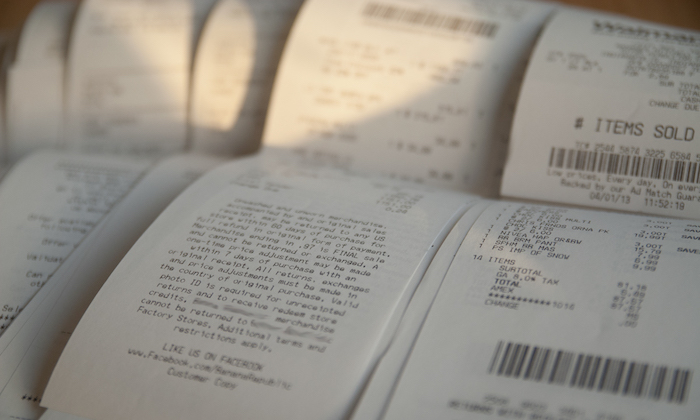
Sales Tax/VAT (Mehrwertsteuer) Unlike in the United States, when you see a price tag or a menu in Germany, Austria or Switzerland, what you see is what you’ll pay. The VAT (value-added tax, sales tax) is included in the price, but you can see the tax amount on your receipt. The sales tax is a national tax, not a state (Bundesland) or Swiss cantonal tax. The standard tax rate is 20% in Austria (10-12% for groceries, books and magazines), 19% in Germany (since Jan. 1, 2007; 7% for groceries, books and magazines, flowers, transportation.), and 7.6% in Switzerland (since 2001).
Specialty Shops (Fachgeschäfte) – In Austria, Germany and Switzerland it is still possible to shop in a specialty store where the sales people have some expertise in their field. Although big-box super stores have arrived in Germany, many shoppers prefer a smaller Fachgeschäft, where they can get good advice. Whether it’s cameras, meat, or books, you may also enjoy being waited on by someone who knows what he or she is talking about.
In Europe and the German-speaking countries, the sales tax goes by various names. In Germany it’s the value-added tax (Mehrwertsteuer, MWST). In Austria it’s a turnover tax, or Umsatzsteuer, but the effect on your pocketbook is the same.
VAT Refunds Under certain conditions, when making larger purchases, it is possible for non-Europeans (non-EU residents) to get a VAT refund for non-edible items. However, the procedure is complex (there are forms to be filled out) and arrangements must be made at the time of purchase. You have to prove you are taking the purchased items out of the EU within three months of purchase. The minimum amount entitled to a refund varies from country to country.
Shopping Hours Americans, used to shopping at almost any time of day or night, need to be aware of the Ladenschlußgesetz (store closing law). Notice that it is a store closing law, not a store opening law! Germany, Austria and Switzerland have the most limited business and shopping hours in Europe.
Since 2006 each of Germany’s 16 states has been allowed to pass its own laws concerning store hours, and all but two have done so. But don’t plan on shopping on Sunday or after 8:00 p.m. in most of Germany and the other two major German-speaking countries. (To buy groceries or shop on Sunday, go to the nearest large train station, which often has full-size grocery stores and other shops.) Shopping hours are most liberal in Berlin, but even there they have not yet reached anything close to American conditions or even those in many other EU countries. See Shopping Hours in Germany for more on this topic.
Buying Groceries (Lebensmittel) The first thing an American notices in a German supermarket is a more limited selection of brands and products. (The selection in Switzerland and Austria can be even more limited.) While an American supermarket may offer 20-30 different breakfast cereals, a German one may only have a dozen or so (including a few you’ve never seen before!). On the other hand, German grocery stores usually offer a wider selection of cheeses, meats, bread varieties and other foods, although many Germans still prefer going to a butcher shop (Metzgerei), a bakery (Bäckerei) or pastry shop (Konditorei) for such things. See Grocery Shopping in Germany for more on this topic.
The second thing you may notice is that the checkout clerks are seated at their cash registers rather than standing. Checkout (die Kasse) in a German grocery store is much like that in the US, with laser scanners, etc. But you may feel rushed as you try to pay and bag all your groceries yourself! (That is not the cashier’s job and baggers are extremely rare.) The next customer in your checkout lane will soon be shoving his or her way into your space. And don’t forget to bring your own shopping bag – or you’ll have to pay for one.
In larger German metropolitan areas there are also Costco-like super stores (Globus Handelshof, Kaufland, Metro, Real, etc. – see links below) that sell groceries and other items at “wholesale” prices. As with Costco, you usually have to be a member in order to shop at such hyper stores, and you’ll probably need a vehicle to haul away all your goodies.
Aldi and Lidl are the main discount grocery store chains in Germany and other parts of Europe. In Austria, Aldi uses the name “Hofer.”
More grocery store differences:
Credit cards (Kreditkarten) Very few German grocery stores (or any stores for that matter) accept credit card payment, and then only in tourist areas or at larger stores. Most will accept the EC bank card (which requires a German bank account), but your best bet is plain old cash. There’s usually an ATM (Geldautomat) in the store.
Shopping carts: You’ll need a one-euro coin for the shopping cart deposit. (The smaller plastic baskets don’t require any deposit.) Just insert the coin into the slot to unlock the cart. When you return the cart, you get your coin back.
Weighing veggies/fruit: Many grocery stores require you to weigh and bag fruits and vegetables on a scale in that department before you go to the checkout stand. Some stores have scales at the registers, but you still usually need to put your items in a plastic bag.
Organic/natural foods: Germans are big on “Bio” (BEE-OH, natural/organic), and you will find a good selection of organically grown food in German supermarkets and Bioläden.
Vegan/Vegetarian: In recent years it has become easier to find vegan grocery items (and vegan restaurants), but mostly in larger cities. Do an online search for “vegan” (the correct German term!) or “veganisch” (incorrect), or other related terms in German (e.g., vegane Lebensmittel, vegan groceries) to find stores near you. Less than 1 percent of Germans identify as vegan.
Bottle return (Leergut) Most of the beverage glass and plastic bottles you get in Germany/Europe have a deposit value that you can get back by returning them to any market (not necessarily the one where you bought them). Most grocery stores have automated machines that scan each bottle and determine the deposit value. You get a ticket (Bon) with the total amount, which you give to the cashier at checkout to get your cash.
Real orange juice (direkt gepresst): Most Germans drink the normal bottled orange stuff they call orange juice (Orangensaft) – but really isn’t and tastes like crap. If you want the real thing, you have to make your own or go to the refrigerated section and look for cartons labeled “direkt gepresst” (directly squeezed, sometimes found in a special glass-door fridge). Other juices are also available direkt gepresst as well.
Clothing (Kleidung) When it comes to shopping for clothing and shoes, Europeans, Americans and the British use very different systems for sizes. Not only is there the difference in metric versus English measurements, but there are different philosophies in some areas, especially in children’s sizes.
For children’s clothing, Europeans go by height rather than age. For instance, a child’s size 116 in Europe is for a child 114-116cm (45-46in) tall. That equals the US/UK “age 6” size, but not all six-year-olds are the same height. When converting children’s sizes, you should keep that difference in mind. See the conversion charts below for more.
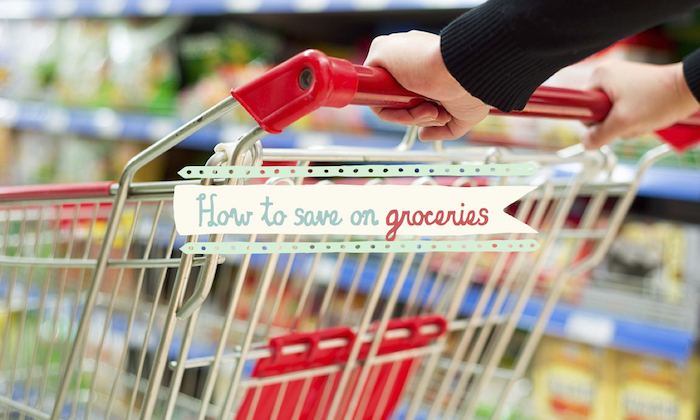
Do astronomical grocery bills give you panic attacks? Singapore’s an expensive place, and groceries in Singapore are no exception. Here are 20 tips from a savvy mama on how to save on groceries!
Grocery shopping in Singapore can be an expensive and anxiety ridden experience. Exhibit A: note the two almost identical pieces of broccoli below that one mama recently photographed at two different local grocery stores. The bottom line is, there are definitely ways to save money on your groceries in Singapore, you just need to put some thought and effort into planning. Here are some tips from the members of Singapore Smart Spenders on Facebook to help you cut your grocery budget and save money.
1. Make a list and stick with it. Make a weekly meal plan, and write out the ingredients you will need.
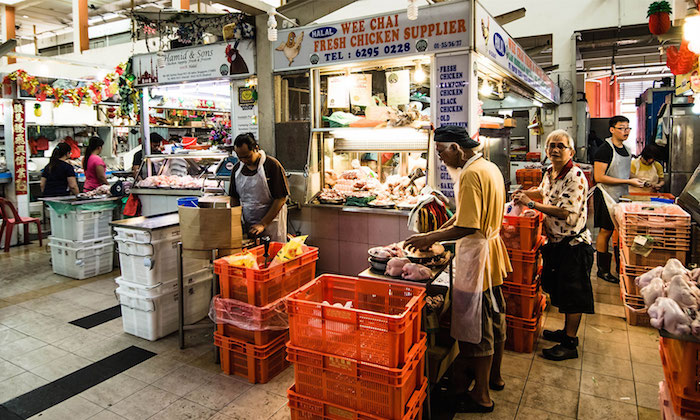
2. Avoid high end supermarkets and those that specialise in imported products. Instead, shop at discount supermarkets (such as Giant, ShengSiong and FairPrice) and use online shopping like HonestBee or RedMart. This allows me to carefully select what I want from my computer. It’s difficult to make impulse purchases and I save on taxi fare. Some supermarkets have free delivery at a certain spend level, but even at $7, a delivery it is cheaper than round trip taxi fare. Plus I save time shopping and queuing with online shopping. My recommended shops are Giant Online, Sheng Shiong’s online store allforyou, QB Food (for meat and cheeses), Phoon Huat (discounted cheese, baking ingredients), Foodie Market Place (discounted meat and cheese).
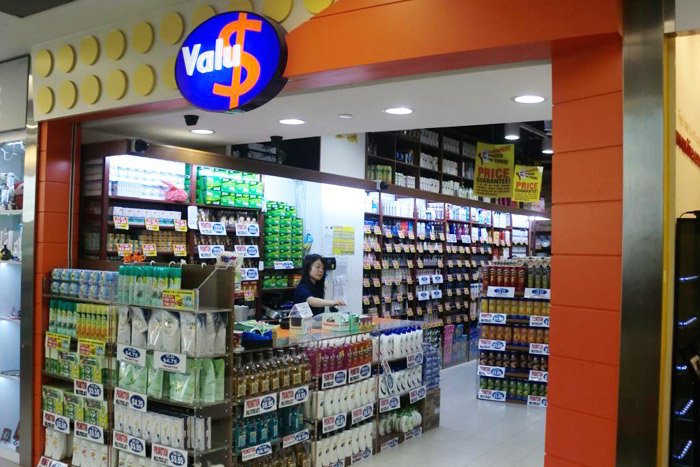
3. For toiletries – Try finding the specialty shop near you that has discounted toiletries (usually located in HDB areas or in some malls). Recommended shops: Ocean on New Market Road, ABC shops, Valentine Fragrance at Parkway Parade Mall, ValuDollar.
4. When possible, buy frozen meat. If you notice, most things are previously frozen anyway.
7. Limit purchases of wine and cheese, and if you must buy the cheapest stuff possible. FairPrice has a wine club that has 8% off.
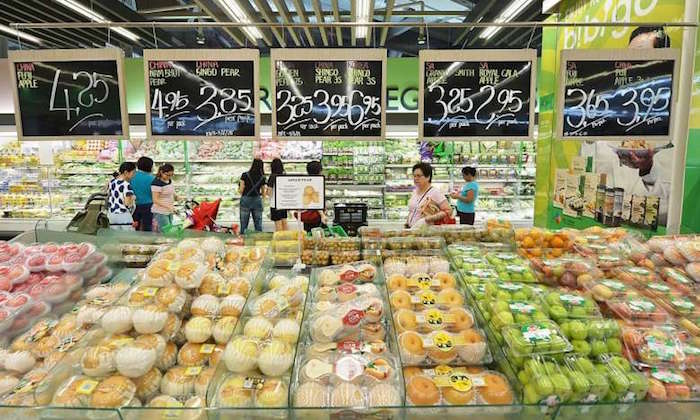
8. Don’t buy produce in the off season. Berries and mangoes can be crazy expensive when not in season, so substitute a fruit that is more affordable. If you’ve never eaten it before, now’s the time to try something new. Have lots of salad and vegetables with each meal but stick to affordable ones (cabbage vs. asparagus, kai lan vs. kale). Only buy potatoes if you plan to eat them in the next few days or store in the fridge, as they spoil easily.
9. Stock up when things are on sale. Marketplace is known to put bacon on sale at 50% off so we will buy extra and freeze it. Butter is also freezable.
10. Try the cheapest alternative to your favourite products. Do you really need to buy a $7 bag of Doritos when a $1 Cheeze Balls is just as tasty?
11. Buy fresh food and prepare from scratch. Avoid buying boxed things if possible, but also be critical of your recipes. Things with a bunch of different ingredients get pricey quickly. Try to cook simple meals with protein, vegetable and starches and as few ingredients as possible. You can do a lot with butter, garlic, onion, and ginger. I had to give up a few recipes that, while delicious, cost me more than a restaurant meal to prepare myself. Forget those and use on special occasions.
12. Don’t overbuy — otherwise you will just throw out spoiled food.
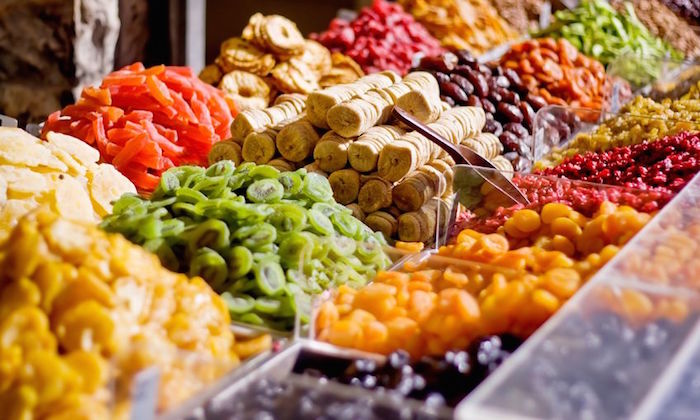
13. I keep dried fruit on hand for snacks. It can be more expensive than fresh but it also has a longer shelf life and is more portable.
14. Learn to save everything to freeze and reuse in other recipes. For example, freeze bananas, then make banana bread, smoothies, or pancakes. Fried rice is a great way to reuse meat and vegetables. Leftover mashed potatoes from one dinner can make tuna patties or masala potatoes another night. Mini muffins and quiches are great for using up leftovers and spring roll wrappers are a much cheaper case instead of pastry. Leftover bread can be turned into bread pudding, bread crumbs, croutons.
15. Cook Asian dishes instead of Western. They are lighter on meat and ingredients are much easier to buy.
16. Have a budget and stick with it. Figure out how you can swap and substitute and cut back. Be brand un-loyal and be willing to substitute for what is cheaper and on sale.
17. I will stretch a recipe asking for a large amount of meat with less meat but extra vegetables, or even a can of beans.
18. Get a slow cooker. You can buy cheaper cuts of meat like chicken leg quarters and beef chuck and the slow and low temp makes them just as tender as breast meat.
19. Take inventory of what you have on hand. Use before you have to throw away or things expire.
20. Redefine your meals. A simple sandwich or salad can also be dinner. Mealtime is about recharging and bonding with friends and family, so you don’t have to focus on the food, instead focus on the company. Or — Don’t shop. Enjoy a large hawker plate of chicken rice with your family. It’s cheaper than cooking at home (we won’t get into the nutrition…).

:max_bytes(150000):strip_icc():format(webp)/GettyImages-1042998066-518ca1d7f2804eb09039e9e42e91667c.jpg)
:max_bytes(150000):strip_icc():format(webp)/chicken-satay-recipe-3217478-9-11_preview-5afc98338e1b6e0036d4c9d9.jpeg)
:max_bytes(150000):strip_icc():format(webp)/ThaiMiniShrimpLettuceWraps-DarleneA.Schmidt-5b116cf0a9d4f90038e40454.jpg)
:max_bytes(150000):strip_icc():format(webp)/Thai-Tom-Yum-Soup-GettyImages-593462647-58b732913df78c060e03cc04.jpg)
:max_bytes(150000):strip_icc():format(webp)/spicy-chicken-salad--larb-gai--137332842-5ac27af2a18d9e003722b44e.jpg)
:max_bytes(150000):strip_icc():format(webp)/nam_tok-5a08fe89b39d03003719624a.jpg)
:max_bytes(150000):strip_icc():format(webp)/somtam650-56a949a73df78cf772a57281.jpg)
:max_bytes(150000):strip_icc():format(webp)/weepingtigerbeef-56f49c955f9b5829866348be.jpg)
:max_bytes(150000):strip_icc():format(webp)/greencurrychicken640-566663ba3df78ce161ce3367.jpg)
:max_bytes(150000):strip_icc():format(webp)/thai-panang-curry-recipe-3217463-11_preview-5af9d0821d64040036360d96.jpeg)
:max_bytes(150000):strip_icc():format(webp)/thai-chicken-curry-with-rice-in-a-bowl-154931668-584b53bd3df78c491e76c24e.jpg)