Grocery shopping in a country other than your own is a minefield and even more so when you don’t speak the language.
With herrings, mackerals and liver pate all lurking within the aisles of Danish supermarkets you’ll appreciate the stakes can be quite high. One wrong move and you can find yourself sucking the wrong end of a mackeral.
I loved grocery shopping in New Zealand. The supermarkets had wide aisles with variety and produce brought from the paddock just the day before. There were labels I could read, a cashier that talked to me and on a good day even someone to pack my groceries. I did not live in fear of being run over at the checkout when I failed to pay and pack fast enough or being unmercifully wedged in an aisle with pram, BBB (Bilingual Backpack Baby) and a shopping basket.
If you’re likely to be grocery shopping in Denmark anytime soon it may be in your best interests to follow the below survival guide.
1. Be fast
Speed is everything. If you can’t pay, pack and move away from the checkout before the next customer needs to pack, then you’re likely to be on the receiving end of the ‘stink eye’. A fellow expat recently described this state as “Pay. Pack and get the hell out”. I couldn’t agree more.
If you don't move fast enough at the checkout you'll likely be run over by one of these people.
2. Buy what fits in your bike basket
In Copenhagen, you’ll likely be visiting the supermarket on bike or foot so whatever you buy you’ll be carrying it home. Therefore choose wisely. As a rule of thumb, only buy what you can fit in your bicycle basket (imaginary or otherwise).
The days of buying a week or fortnight’s worth of groceries and driving home are largely over. Now you must survive by buying groceries for just a few days in advance. Only enough to fill your bicycle basket. This will also help ensure you can achieve point #1.
Only buy what you can carry home.
3. Expect limited variety
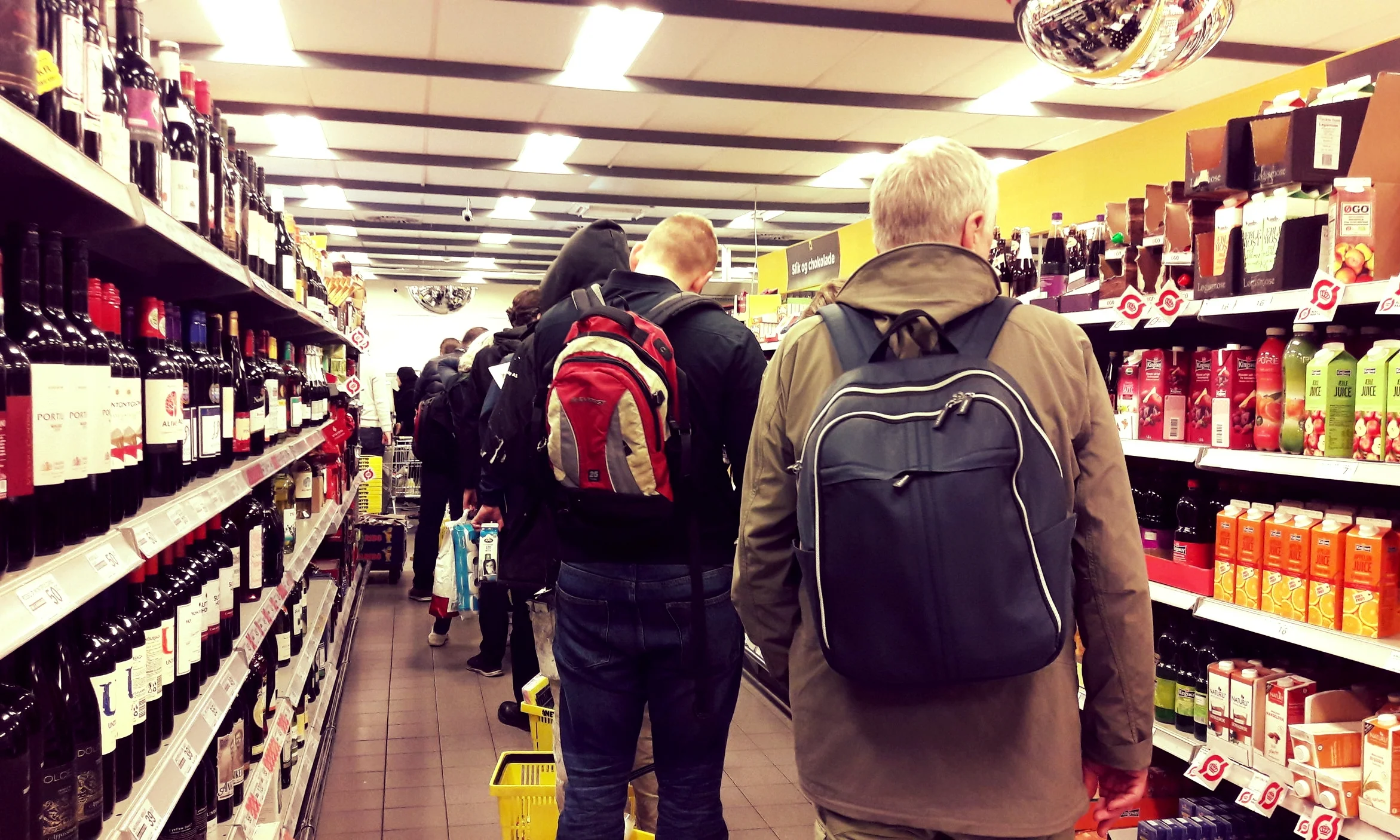
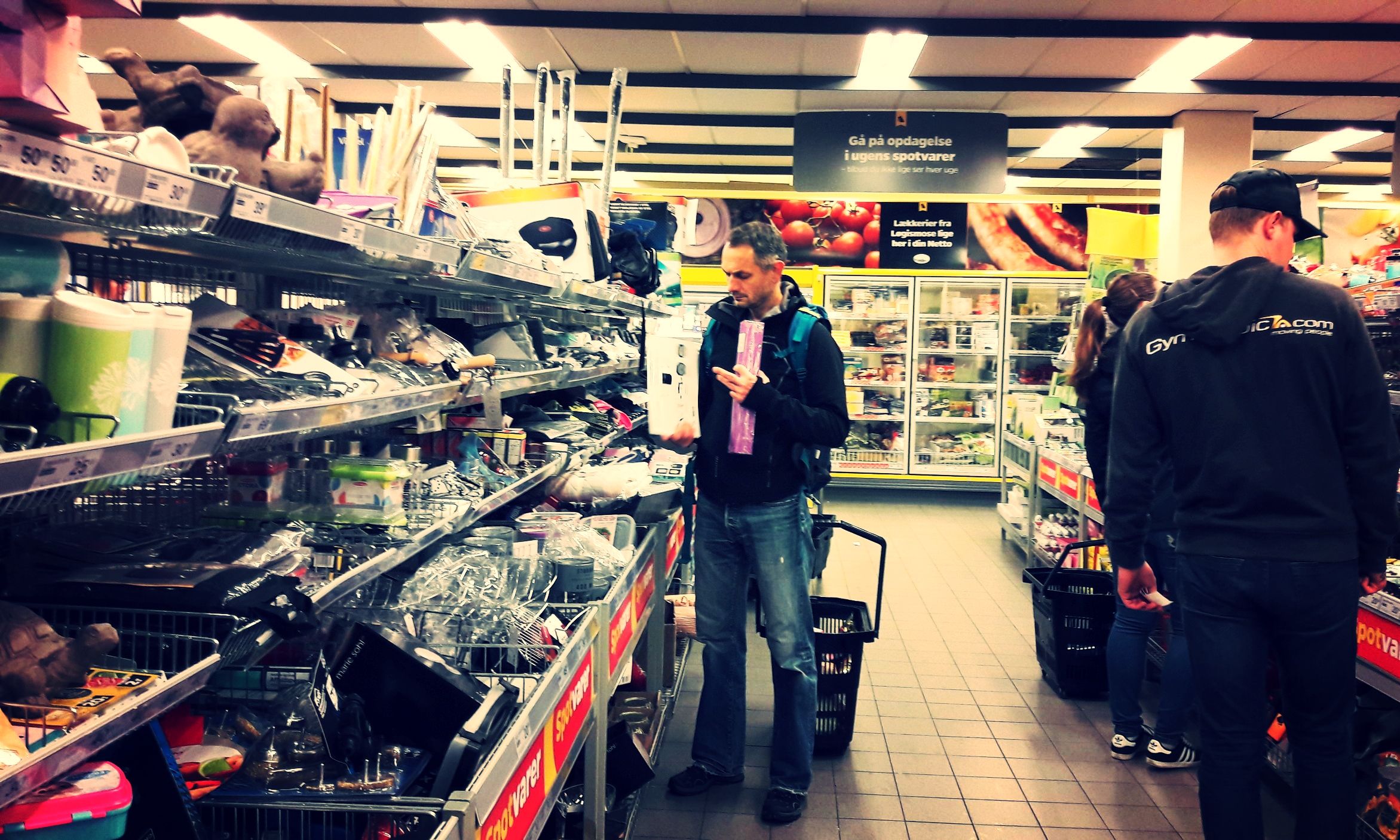
In terms of variety, expect none. The limited space, particularly in Copenhagen supermarkets, guarantees not only a high risk of being caught in a one-way traffic aisle jam but that you’ll also only ever find 1 or 2 brands of each product.
The positive we can take from this is that you can now improve your PB (personal best time) while shopping by eliminating choices.
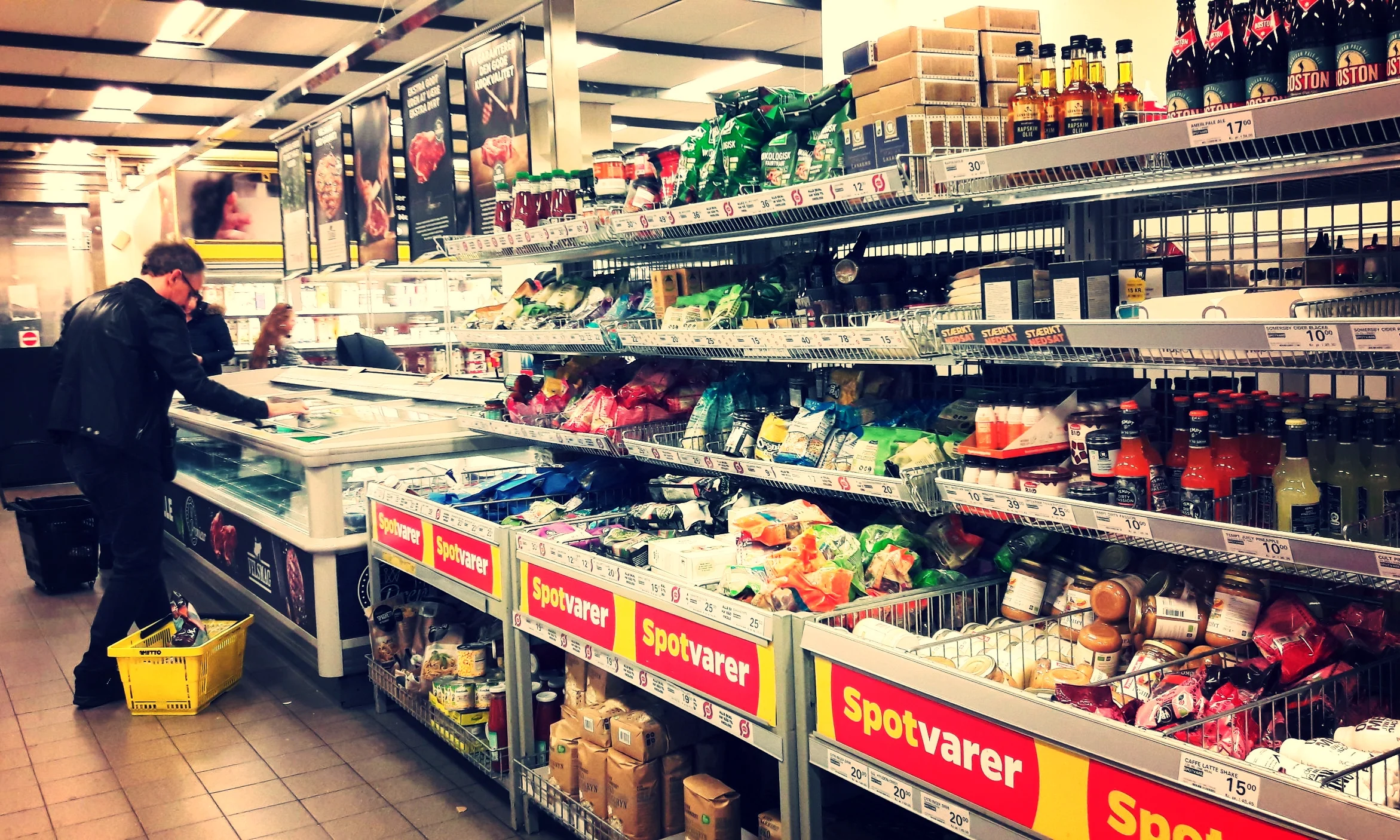
Smaller stores means limited variety, but it can also means random finds every week too. You just can't guarantee they'll have it again next week.
4. Be a regular
Be a ‘regular’ at your supermarket. Shop in the same supermarket every time and you’ll quickly master their layout enabling you to more successfully navigate your way around the shop. Thus also assisting with point #1.
Make their place, your place.
5. Swipe left or right
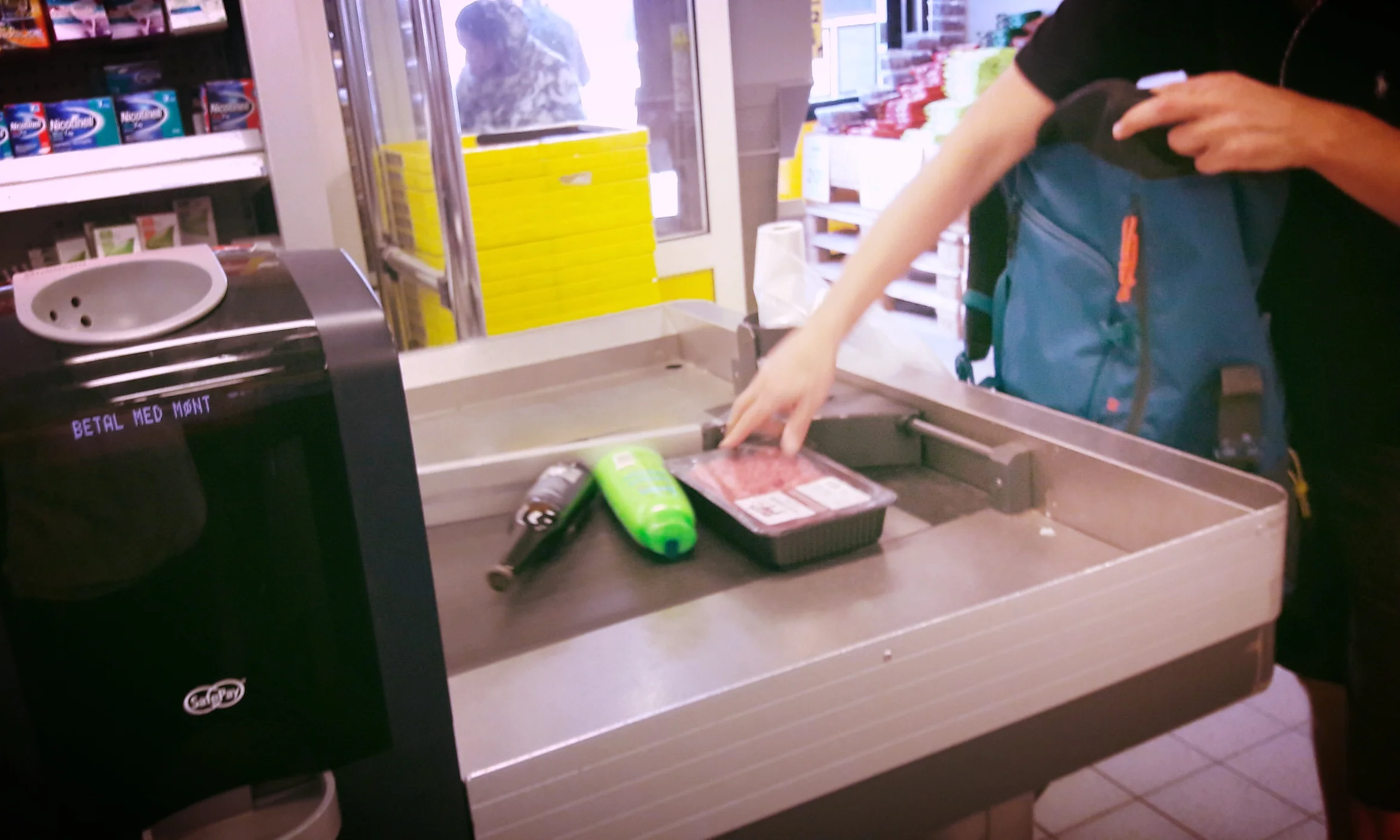
When you get to the checkout you will see what is quite possibly one of Denmark’s finest inventions - the conveyor belt divider. After scanning your groceries the cashier will swipe your groceries left or right for you to start packing them. This allows the cashier to start serving the next customer while you desperately try to pack your groceries from your side of the conveyor belt before customer #3 enters the picture.
Note. Swiping left or right is not a sign of affection or otherwise.
Your groceries will be either swiped left or right by a long metal divider so the cashier can start serving the next customer in line.
6. Do your research
Crucial for successful shopping is studying the small mountain of supermarket brochures that will arrive in your letterbox each week.
Additionally they are also a very good way to find out what coloured napkins and candles you should be buying. Orange and black in October for Halloween. Yellow, green and purple in March for Easter. Do not dismiss this information. Candle faux pas are taken seriously in Denmark.
DANISH LIFE HACK : you can sign 'off' from receiving all or some of these brochures at www.minetilbud.dk . PostNord also offers a similar service.
7. Check your receipt
After being lured to the appropriate store based on the promise of the specials in the brochures mentioned above, you then need to check that you are charged correctly. It is a regular occurrence at some supermarkets for ‘sale’ items to not be updated with the new price. We often have this surprise at our local Netto supermarket..
8. Napkins and Candles
At the very least one aisle in the supermarket will be designated for candles and napkins. In New Zealand the ‘candle aisle' is where you go to fill your earthquake survival kit. In Denmark it is where you go to spend hours reflecting on what candle will work with what napkins according to the season. Whilst I may have exaggerated other aspects of survival in Danish supermarkets, I am not exaggerating this. Just wait for Christmas. They will be pallets of them. Everywhere.
Denmark is a Scandinavian country very famous for the rich design heritage. Arne Jacobsen and Hans J. Wegner, the design legends, has brought forward Denmark’s design sector to be one of the leading in the world.
If you want to shop for fashion or design items to decorate your interiors, Denmark is definitely the shopping hotspot. In fact, Denmark can be considered as one of the hottest regions for the design industry in the world.
From cutting-edge, unique products of homeware stuff to fashion articles, Denmark has it all. If you are looking for some A-class fashion and design articles, Denmark is the place that you should visit. You can also bring home souvenirs and handmade gifts or antiques for your friends and family or surprise them with some cool Scandinavian gift.
Shopping in Denmark is quite a fun endeavour. Although there are not many shopping malls in Denmark, you can still buy quality stuff from the beautiful stores and showrooms of Scandinavian taste. If you are someone, who is looking for some cool places for shopping in Denmark then you have come to the right place. In this article, we have compiled a list of best things to buy in Denmark along with the locations where you will find them, including the various Denmark shopping malls that you can check out. Bookmark it for your upcoming trip to Denmark.
Shopping In Copenhagen
From boutiques to Danish stores to big designer labels, you will find everything in the country capital. Copenhagen is quite a compact city that is filled with shops of all tastes and dynamics. The biggest names in fashion and design brands, as well as Scandinavian fashion, can all be found in this lovely city. The Copenhagen city centre is a cosy marketplace with all sorts of different boutiques. The buzzing shopping districts are full of items of elegant taste. Let us take a look at the best shopping centres at Copenhagen where you can buy the items of your choice.
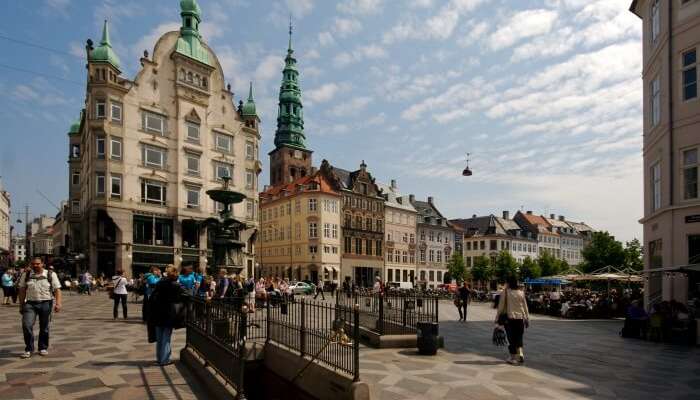
Stroget is a pedestrian shopping zone that runs from the heart of the city all the way till City Hall Square. Near the City Hall end you’ll find young and budding fashion labels and if you are looking for exclusive brands, then head down towards the Kongens Nytrov and if you head further, right next to Norreport station you will find Torvehallerne, a new indoor market segment in the heart of Copenhagen. Although shopping prices in Denmark vary from market to market, you can still enjoy.
Location: Kobenhavn, Denmark What to buy: Fashion wear, apparels
Munthe is an urban, bohemian fashion brand currently owned by Naja Munthe and Henrik Fjordbak. This brand was established in 1994 and the company has many stores in Copenhagen, Aarhus, and Oslo. It’s one of the best places to go to while shopping in Copenhagen Denmark. Here in these brand store, you can buy fashion from over 15 countries of the world.
Location: Store Regnegade 2, 1110 Kobenhavn, Denmark What to buy: International fashion wear, branded clothing
This brand takes its inspiration from the Scandinavian ethnic culture and creates contemporary looks with embroidery and embellishment for both men and women alike. They have their flagship stores in areas of Copenhagen and Odense where you can shop for fashion from over 25 countries of the world.
Location: Københavns Lufthavn 2770, 2770 Kastrup, Denmark What to buy: Scandinavian ethnic wear, embroidered clothing
This brand was launched by Danish designer, Rikke Baumgarten, and Helle Hestehave in the year 1999. Baum Und Pferdgarten are famous in many countries because of their unique contrast styled clothing. The brand has their stores in Copenhagen, London, Tokyo, New York, Paris and 20 other countries of the world.
Location: Vognmagergade 2, 1120 Kobenhavn, Denmark What to buy: Contrast styled clothing, branded fashion wea
Germans love to shop. In fact, you might say it's a national pastime, which is a good thing because it makes finding anything you need easy.
"The mall," however, which you may be used to, is not nearly as well-developed in Germany. But more and more of them have been opening over the last couple of years, including a variety of "Outlet Malls".
You can find a number of "Big Box" stores in many city suburbs, and even in some city centers. Hela Baumarkt and Hornbach, for example, are do-it-yourself stores. MediaMarkt and Saturn, on the other hand, offer appliances, home electronics, music and video as well as computers and telephones. Ikea and Moebel Martin have their own outlets.
There are also the "hyper-stores" such as Real, Kaufland and Globus Handelshof which offer a wide range of products including groceries, household goods, beverages, pet supplies, clothing etc. These hyper-stores are housed within shopping centers and often coupled with a few other large specialty stores.
Then there are the German "discounters" such as Aldi and Lidl, which enjoy an almost cult following and specialize in groceries and a weekly rotation of items ranging from textiles to toys or office supplies at unbeatable prices.
Mid to large-size towns all have their classic 'Marktstrassen' or market streets, often charming pedestrian zones with stores running on either side of the street. Good public transportation systems make it less necessary to shop by car, and many cities have revamped their downtown shopping areas and made them pleasant places to stroll and shop. Outdoor cafés, sidewalk musicians, benches, fountains, trees and shrubbery, weekly fruit, flower and vegetable market stands, make shopping a very pleasant experience.
Changes in the law and the rise of discount stores have led to some refreshing price reductions, especially in food stores.
Once you get away from the department stores and discounters, though, specialization is the name of the game. Many small shops offer a wide selection of items within a limited product line, such as fashions, china, glassware, leather goods, fine metalware, shoes, handicrafts, toys, electrical goods, musical instruments, optical instruments, books, flowers, spices, oriental carpets, sports equipment, tobacco products, antiques, candles, maps to name just a few. These niche shops, however, are often forced to charge higher prices to stay competitive.
Specialization is particularly noticeable in food stores. The Metzgerei (butcher), Backerei (bakery) and Konditorei (pastry shop) are run by masters of their profession. The product is good and these places are often set up so that you can enjoy a fresh roll, hot sausage or piece of cake right on the premises. Another very special kind of food store is the Reformhaus (health food store), where the health-conscious Germans get their organic yogurt, whole grain breads, tofu and vitamins.
Shop While Traveling
The medieval, walled city of Rothenburg is always worth a visit, especially as it is home to the "mother of all Christmas stores," Käthe Wohlfahrt's. Visitors to the store should allow time to take in the German National Christmas Museum, directly above the main shop.
Places like Luxembourg have long been noted for much lower prices on a host of items, including gas, tobacco, coffee, tea and alcohol. Many far-Western Germans fill their tanks in the Grand Duchy during the week as well as on Sunday, when a car wash is nowhere to be found in the Federal Republic. With taxation causing German petrol prices to soar, Luxembourg and even Switzerland offer pleasant diversions and Sunday shopping.
Online Shopping
Sometimes savings are also possible by ordering online, and the German Trade Board, or "Hauptverband des Deutschen Einzelhandels," reports that 93.9 percent of German households now have computers. You can eliminate the travel agent's fee when booking airline tickets or hotel rooms, and many online retailers have saved themselves the expense of a bricks and mortar store. The big mail-order companies like Quelle and Neckermann have put their entire catalogs online, accessible 24/7.
Another advantage of online shopping is variety. Expatriates can turn to the web to get items from home that are not normally available in German stores. While there are some British and American stores in the larger German cities, many expats don't have easy access to them. To the delight of many customers, enterprising store-owners are now offering their products online with convenient English language websites. Large variety, ease and security of payment, and efficient shipping combine to make on-line shopping a great alternative.
Personal checks as Americans know them are virtually non-existent in Germany. Non-cash transactions are usually by fund transfer or with debit cards from the customer's bank or with an EC card. Credit cards are not as well established as in some other countries, but are becoming more and more popular.
Nuts & Bolts of Shopping
Thanks to changes in the law, opening hours are quite liberal. Many stores are open from 8 am until as late as10 pm from Monday to Saturday and generally closed on Sundays - there are always exceptions so do check in advance. Large railroad stations and airports have stores open around the clock. Neighborhood kiosks also have extended hours, as do gas stations, which usually have non-automotive items for sale.
It pays to watch out for the annual sales; the Winter-Schlussverkauf (winter closeout sale) and Sommer-Schlussverkauf (summer closeout sale.) These usually begin on the last Mondays of January and July respectively and run through the second following Saturday. They used to be a matter of law, and were the only ones permitted during the year. But recent changes mean that you might find a sale at any time of year: be it for an anniversary of the store's founding or the end of a season.
Though the closeout sales are no longer official, customers like them and they are usually retained. They offer lots of goods, notably clothing, sporting equipment and household items, at savings of up to half price.
The sales are not the only way of saving money in Germany. Sometimes it is possible to find coupons offering special reduced prices on specific items as well as percentage off on some items.
Somewhat more popular are the retail reward programs, in which the customer gets a card which he or she presents when making a purchase at a participating store. A certain number of points, often a cent for every Euro, will be recorded on the card. When enough points have been assembled, the customer can have something free or at a discount. Participants run the gamut from supermarkets and department stores to car rentals, telephone companies and hotels.
It doesn't take long for visitors to Thailand to realise that street food is practically a way of life there.
Considering that many houses aren't equipped with full kitchens, and raw ingredients can cost more than prepared meals, it's no surprise that eating out is more common than eating in.
If your priority when travelling is to experience the culture or enjoy the food (or to save money), the Thai street food scene will be a dream come true. Bangkok is indeed the country's mecca of street food, but there are plenty of stalls, carts, and markets all across Thailand.
From noodles to curries, soups to salads, dumplings to spring rolls, and roti to sticky rice, you could spend weeks sampling Thai cuisine. Some of the top street food to eat in Bangkok or elsewhere in Thailand includes pad thai, pad see ew, massaman curry, papaya salad, banana roti, and mango sticky rice.
123RF
Grilled chicken in Khao Kalok south of Hua Hin, Thailand.
Whatever dishes you choose, it will probably be the tastiest and cheapest food of your trip.
Of course, a street food cart on the side of the road in Thailand isn't going to follow the same hygiene regulations as your favourite restaurant back home. Some travellers wonder whether they should eat street food at all, or if it's a guaranteed way to get sick.
Contrary to popular belief, though, street food in Thailand (and many other countries) is no riskier than restaurants. When you eat on the street, you're more likely to be served fresh food and to get to see it being prepared, both of which go a long way toward keeping you healthy.
In fact, I consider myself lucky to have gotten sick abroad only three times in years of travel, and the culprit every time was a "nice" restaurant that catered to foreigners – never a food cart.
While travelling in a developing country carries some inevitable risk, these tips have helped me enjoy the street food of Thailand without getting sick.
Watch your food being cooked
One big benefit of street food is that you can often see the food being cooked, so take advantage of it! Are there bugs near the ingredients or the pans? Did the vendor wipe their nose while they were preparing food? Does the cooking area seem generally dirty?
If so, look for another option. Some larger stalls in Thailand prepare food in the back and then bring it out to customers, so avoid those in favour of places where you can see what's going on.
123RF
Watch the vendor serve other customers
In addition to seeing the food being cooked, watch the people in front of you being served. Is the same person handling both cash and food? Did they touch their face and then the food? Is the food being served in dirty containers?
Again, if the answer is yes, head elsewhere. There are so many street food options in Thailand; you won't have any problem finding something else.
Look for food stalls with long lines – especially of locals
A cart or stall that's unhygienic and regularly makes people sick probably won't be teeming with customers, especially locals, who will know if certain places are unsafe to eat. If you notice an empty food stall, there may well be a reason it's empty – and that's a good reason for you to avoid it.
Beyond that, one of the biggest risks of street food comes from food that isn't fresh. If a dish has been sitting out in the sun for hours, it's much more likely to make you sick. But long lines usually mean quick turnover; unless you can see an enormous stockpile of food sitting there; the vendor has to keep preparing new food to serve up to all the customers.
If you get in the back of a line, you'll probably get food that's fresh, and that means it's safer.
123RF
Street f
Eat at regular local meal times
Of course, there might not be lines anywhere if you're there at the wrong time. Going out for street food in the mid-afternoon may mean getting a dish that's been sitting out since the end of the lunch rush, which is plenty of time for bacteria to form. Instead, eat at local meal times, since that's when food will be the freshest.
Be careful with drinks made with water or ice
Juices and smoothies are common street foods, but they're made with tap water (or ice made from tap water) in most places, meaning they should be avoided. There's an exception in Thailand, though: factory-produced ice made from purified water is quite common, even at street food stalls.
But it's not everywhere, so check what's being used before you order a drink with ice. The purified ice is usually cylindrical and has a hole in it, so look for that; if you see ice chips or shaved ice instead, steer clear of it.
Skip raw fruit and vegetables unless they can be peeled
The bad news is that fruits and vegetables can easily carry bacteria, making them unsafe to eat raw. Two top foods to avoid in Thailand are fresh leafy greens and berries, which are especially likely to be contaminated.
But the good news is that fruit with a peel is safe, because the skin protects the edible inside, even in unclean environments. And with all the Thai fruits that have a peel – dragonfruit, mangosteen, rambutan, not to mention bananas, mangos, and pineapple – you won't be missing too much.
123RF
Beware of the spice level in your food
Eating spicy food when you're not used to it isn't quite the same as getting food poisoning, but it may leave you feeling less than great. And in Thailand, the food can be hot. Even if you're a spicy food fan at home, I recommend starting with mild or medium spice levels until you have a better idea of what to expect.
And if you don't typically like spicy food, make sure your food in Thailand is as mild as possible.
Some stalls that prepare food to order will ask how spicy you want it, and even if not, you can always try to make a special request. When you order, say "Mai sai prik" (don't add chilli) or "Mai pet" (not spicy). Of course, a dish that's "mai pet" to them might not be to you!
Places with menus sometimes denote the spiciness of each dish, too, and many stalls also have sauces of varying levels of spiciness that you add yourself. Keep in mind that two of the most popular dishes, som tam (papaya salad) and tom yum (a particular type of soup), are especially spicy by default.
Make sure your food is piping hot
When it comes to temperature, though, hotter is better, because that means it's been thoroughly cooked. Food, especially meat, that isn't fully cooked is one of the riskiest things you could eat, and should probably top the "what not to eat in Thailand" list.
A lot of street food is cooked in a pot of boiling water or a vat of sizzling oil, so most dishes are plenty hot. But if you're served something that's not fully cooked, ask for it to be cooked a few more minutes, and be especially vigilant if it has meat. If that's not possible, toss it – street food in Thailand is super cheap, and it's not worth the risk.
Use hand sanitiser before you eat
When it comes to street food safety in Thailand, there are a lot of factors, but your own hygiene is one that's easily within your control. Every time I use hand sanitiser while travelling, I think of Leonardo DiCaprio's character in Blood Diamond, when he mocks the humanitarian workers by saying: "You come here with your laptop computers, your malaria medicine, and your little bottles of hand sanitider…"
But the stuff works, and it's a reasonable and easy precaution to take when you're eating street food.
Pack oral rehydration salts and activated charcoal
Even if you follow all these tips (or even if you don't eat street food in Thailand at all), there's still a possibility of getting sick. Food poisoning can happen anywhere, and a higher risk of it is just part of travelling in a developing country, so it's a good idea to be prepared.
Oral rehydration salts will help you stay hydrated if you get sick, which is especially critical in Thailand's hot, humid climate, and activated charcoal tablets absorb toxins in your stomach and stop diarrhoea. If you do end up getting sick, you'll be glad you have them. Also, be sure to read up on what to bring to Thailand before going as there are several other packing list items that will help you from getting sick.
Know how to communicate about your allergies
If you have any allergies or other restrictions, eating street food in Thailand is extra complicated. Before you hit the food stalls, look online to see if anything you can't eat appears in everyday dishes. Not every vendor follows the same recipe of course, but that will give you an idea of whether there are dishes you need to be careful with.
For instance, pad see ew typically has eggs, pad thai usually has both shrimp and eggs, and most satay sauces are made out of peanuts. Beyond that, learn how to say and read the Thai names of any foods you can't eat so that you can ask about them.
There's always a chance of miscommunication, or a vendor may not know what's in every ingredient or may just tell you what they think you want to hear, but asking is still a wise step to take.
Here are a few common allergens that are popular in street food in Thailand:
Eggs – khai
Peanuts – tua li song
Wheat – khao sali
Milk – nohm
Shellfish – hoi
Opt for dishes with fewer ingredients
This is admittedly not a rule I follow myself, but choosing dishes with fewer ingredients makes it easier to know what you're getting. It can be hard to tell exactly what all is in a soup, for example, and many vendors use pre-made sauces in their noodle and rice dishes.
Sticking to simpler options – like grilled fish or fresh fruit – is especially useful for people with allergies, but being able to clearly see and understand what's in your food makes it less risky for anyone.
Favour vendors who specialise in one or two dishes
In Thailand, you'll encounter lots of street food vendors who sell just a couple different meals. Stick to them! Food stalls that offer a million different things are less common, but you'll see some of them and might be tempted by all the options.
However, if there are tons of things on the menu, you can bet the ingredients needed won't be fresh for every dish. Stalls that make one or two things probably won't have ingredients that sit around, waiting until someone orders the one dish they're used in.
Watch out for old or contaminated condiments
It's possible to order hot, fresh street food from a stall with a long line at lunchtime, and then ruin it all with a bad condiment. Many food carts in Thailand have sauces and other seasonings you can add yourself, but the problem is that they're usually sitting out and may never get refrigerated.
If a condiment bottle looks like it never gets used, it's probably old, and there's a higher chance it's breeding bacteria. But if you notice that every person in front of you is adding something, that bottle probably isn't that old, and it's much safer.
Communal bowls of seasoning are something else to be careful with since they can be contaminated if someone dips an unclean utensil in them.
Start with small amounts of street food and dishes you're comfortable with
Whether you get sick depends partly on the food and partly on your own stomach. You might eat the same thing as your friend, only to be green with both nausea and envy later, when you get sick, and they don't.
If you've never had street food before or you know you have a weak stomach, I would recommend starting with small amounts. Similarly, stick with simpler and more familiar dishes at the beginning, until you get used to it.
Another option if you're feeling unsure (or want to learn more) is to try a food tour, which will likely take you to food stalls that have been thoroughly vetted and are safe.
If you've never travelled to a developing country, the idea of eating a plate of noodles or a stick of meat from the side of the road might seem foreign, maybe even crazy.
But for many people around the world, it's a way of life. Just follow these tips to eat the street food in Thailand safely, and you may never want to step foot inside an actual restaurant.




 Germans love to shop. In fact, you might say it's a national pastime, which is a good thing because it makes finding anything you need easy.
 The medieval, walled city of Rothenburg is always worth a visit, especially as it is home to the "mother of all Christmas stores," Käthe Wohlfahrt's. Visitors to the store should allow time to take in the German National Christmas Museum, directly above the main shop.


